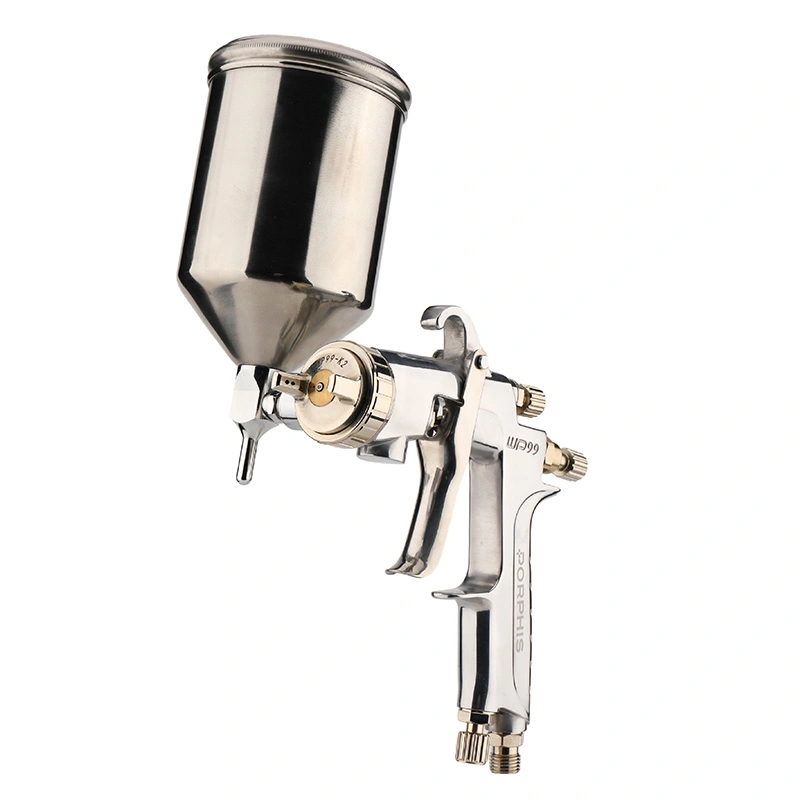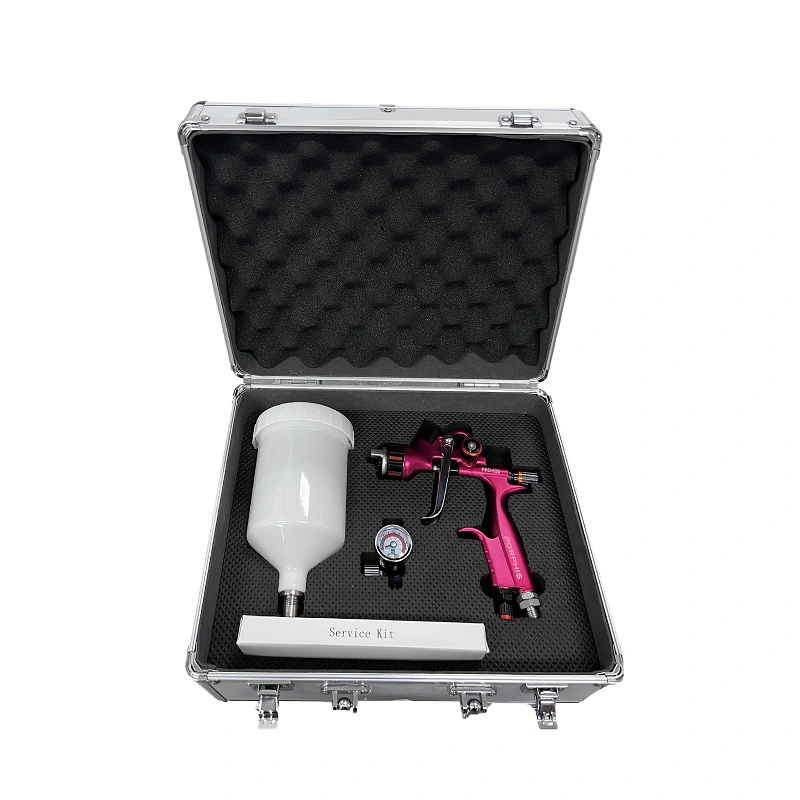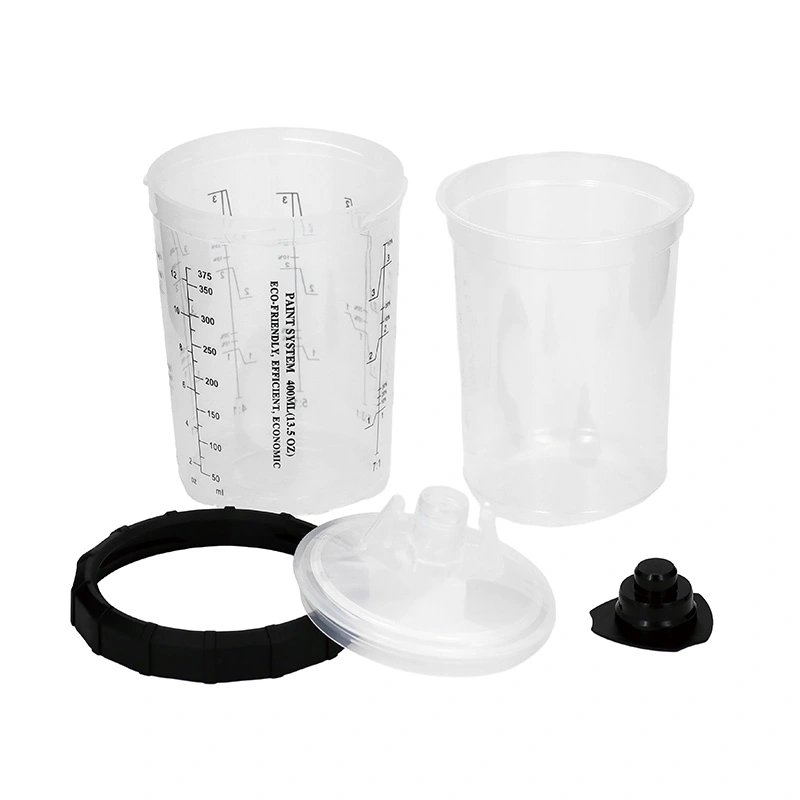
Choosing the right custom spray gun OEM services partner can directly impact your product quality, delivery timelines, and brand reputation. Whether you sell paint spray guns, HVLP systems, industrial coating tools, or specialized cleaning and finishing equipment, OEM manufacturing determines how well your spray gun performs in the real world—atomization quality, coating uniformity, durability, and user experience.
This guide explains what spray gun OEM services typically include, what you should prepare before requesting a quote, the most common customization options, quality standards to ask for, and how to select a reliable manufacturer. If you’re building or expanding a spray gun product line, these best practices will help you reduce risk and speed up time-to-market.
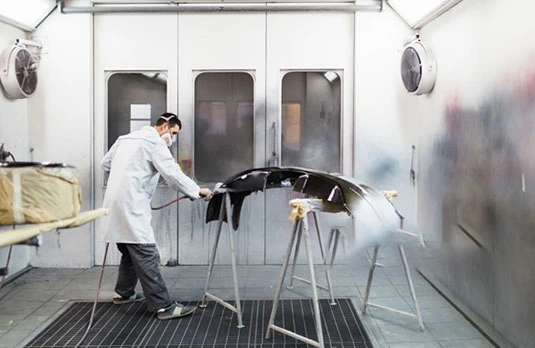
Spray gun OEM (Original Equipment Manufacturer) services refer to a factory producing spray guns based on your requirements—often including design input, prototyping, tooling, mass production, quality inspection, packaging, and logistics. In many cases, an OEM partner can also support ODM (Original Design Manufacturing) where they offer existing models that can be rebranded or slightly modified. A capable OEM manufacturer typically supports:
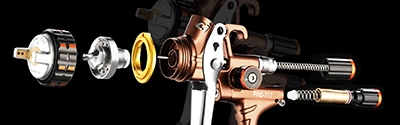
Product customization (nozzle, air cap, needle, trigger feel, materials)
Performance tuning (spray pattern, atomization, flow rate)
Branding (logo, color, labeling, packaging)
Compliance and documentation (QC records, materials, testing reports)
Stable scaling from sample to mass production
For brands and distributors, OEM services are a strategic advantage: you can focus on sales and channel growth while your manufacturing partner handles technical execution.
The global finishing and coating market is competitive. End users care about consistent performance, ergonomics, and durability—especially in automotive refinishing, woodworking, furniture coating, metal finishing, and industrial maintenance. Brands choose custom OEM spray gun production to achieve:
1. Differentiated performance
Optimized atomization for specific coatings (clear coat, primer, water-based paints, adhesives)
2. Faster product development
Prototype quickly, test in the market, refine, then scale
3. Lower unit cost at scale
Better cost control with stable supply and standardized parts
4. Brand consistency
Uniform finish quality, tighter quality control, consistent packaging and documentation
5. SKU expansion
Build a full product line: mini guns, touch-up guns, HVLP, LVLP, gravity feed, pressure feed
A high-quality OEM supplier should be able to customize both functional components and commercial elements.
These components heavily influence atomization and spray pattern. Typical customization items:
Nozzle size options (e.g., .8 / 1. / 1.3 / 1.4 / 1.7 / 2. mm)
Needle material and surface finish
Air cap hole layout for pattern control
Sealing design to reduce leakage and improve durability
Why it matters: If your target customers spray different coatings, your nozzle set strategy defines your market fit.
OEM services may include tuning for:
Fan width and edge definition
Transfer efficiency
Overspray control
Stable output under varying air pressure
This is critical if you’re positioning your spray gun for professional users who require consistent finish results.
Depending on the use case, you may need:
Corrosion-resistant bodies
Solvent-resistant seals
Surface finishing for easier cleaning
Internal channel polishing to reduce clogging
If your customers spray aggressive solvents or water-based coatings, materials and seal selection become a competitive advantage.
Common options include:
Gravity feed cup sizes
Plastic vs metal cups
Pressure feed configurations for industrial lines
Thread types and adapters (regional compatibility)
For brand differentiation, OEM manufacturers can support:
Customized trigger pull and spring response
Grip shape and balance
Color schemes
Laser logo or engraved branding
Retail packaging design and inserts
If your goal is speed, ODM/private label can be a quick launch route. If your goal is a unique product with defensible performance, OEM customization is usually the better path.
ODM / Private Label: choose an existing model, add logo/packaging, ship faster
OEM Customization: modify components/specs to match your performance and brand positioning
Full Custom Development: new structure and tooling, higher upfront cost, strongest differentiation
A practical strategy for many brands is:
Launch with an ODM base model
Collect market feedback
Upgrade to OEM-customized versions for your hero SKUs
Your end users judge your brand on consistency. A professional OEM partner should provide a clear QC process. Ask about:
Incoming inspection for critical components
Leak testing and sealing checks
Spray pattern testing (consistency across batches)
Air pressure stability tests
Surface finish and coating durability checks
Traceability: batch/lot control and inspection records
Also request:
Pre-production samples (golden sample confirmation)
Production sampling plan (AQL or similar)
Failure analysis approach if issues occur
To get accurate pricing and avoid delays, prepare a complete RFQ package:
1. Target application
automotive refinishing / woodworking / industrial coatings / general maintenance
2. Coating type
water-based, solvent-based, high-viscosity, primers, clear coats
3. Nozzle size strategy
single nozzle vs multiple options
4. Expected annual volume
prototypes, pilot run, mass production
5. Branding requirements
logo method, color, packaging
6. Target market
countries/regions (impacts compliance, adapters, manuals)
7. Benchmark competitor model
if you have one, it helps align performance expectations
The clearer your inputs, the easier it is for your OEM partner to recommend the correct structure and component configuration.
Lead time depends on customization depth.
Branding-only (logo/packaging): often the fastest
Component customization (nozzle/air cap sets): medium timeline due to testing and validation
Full tooling and structural changes: longest due to mold/tooling development and verification
Your OEM partner should give a transparent timeline covering: sampling → confirmation → pilot run → mass production.
If you’re building a spray gun line and need an OEM partner that understands both performance and production stability, Porphis provides custom spray gun OEM services designed to help brands launch and scale with confidence. A strong OEM project requires more than manufacturing—it requires coordination across design targets, material choices, performance validation, QC standards, and packaging. By working with a specialized manufacturer, you can reduce product returns, protect your brand reputation, and create repeatable quality across shipments. To explore options, visit Porphis and share your application, target nozzle sizes, and expected order volume. Our team can recommend an OEM customization path—from fast private-label launches to performance-tuned spray gun configurations.
Q:What is the difference between OEM and private label spray guns?
A: Private label typically rebrands an existing model. OEM services allow deeper customization—such as nozzle/air cap selection, performance tuning, materials, and ergonomics.
Q: Can I customize nozzle sizes and spray patterns through OEM?
A: Yes. Many OEM projects focus on nozzle/needle/air cap sets and spray pattern optimization to match specific coatings and user needs.
Q: What is the minimum order quantity (MOQ) for OEM spray guns?
A: MOQ varies by customization level. Branding-only projects usually allow lower MOQ than full structural/tooling changes.
Q: How do I ensure consistent quality across production batches?
A: Use a golden sample confirmation, require spray testing and leak testing, and ask for batch traceability and QC records.
The best custom spray gun OEM services combine performance engineering (atomization, spray pattern, durability) with production reliability (QC, consistency, lead time, packaging). If you choose the right OEM partner and prepare a clear RFQ, you can launch differentiated spray guns faster, scale with fewer defects, and win repeat customers. If you want, paste your current product categories from Porphis (e.g., HVLP, LVLP, airless accessories, cups, repair kits) and your target markets; I can tailor this article with specific internal-link anchors and a keyword cluster plan that supports your homepage + product pages.

 English
 日本語
日本語 한국어
한국어 français
 Deutsch
 Español
 italiano
 русский
 العربية
 Polska