In the world of automotive refinishing, woodworking, and industrial coating, the difference between a “good” finish and a “show-quality” finish often comes down to one critical tool: the spray gun. Whether you are a seasoned professional or a dedicated DIYer, understanding the nuances of paint atomization, transfer efficiency, and equipment maintenance is essential.
In this comprehensive guide, we will break down everything you need to know about professional spray guns, from choosing between HVLP and LVLP technology to mastering the perfect spraying technique. Plus, we’ll show you how Porphis is redefining the industry with high-performance spray equipment.
The most common question in the painting industry is: Which technology should I use? The answer depends on your air supply and the type of project you’re tackling.
HVLP spray guns are the industry standard for automotive and furniture finishing. They use a high volume of air at low pressure to atomize paint.
Pros: High transfer efficiency (up to 65-70%), reduced overspray, environmentally friendly, and saves on paint costs.
Cons: Requires a powerful air compressor (high CFM).
LVLP technology is perfect for those with smaller compressors. It atomizes paint at a lower air volume.
Pros: Operates well with small compressors, creates very little overspray, and offers great control for detail work.
Cons: Not ideal for high-speed production or extremely thick materials.
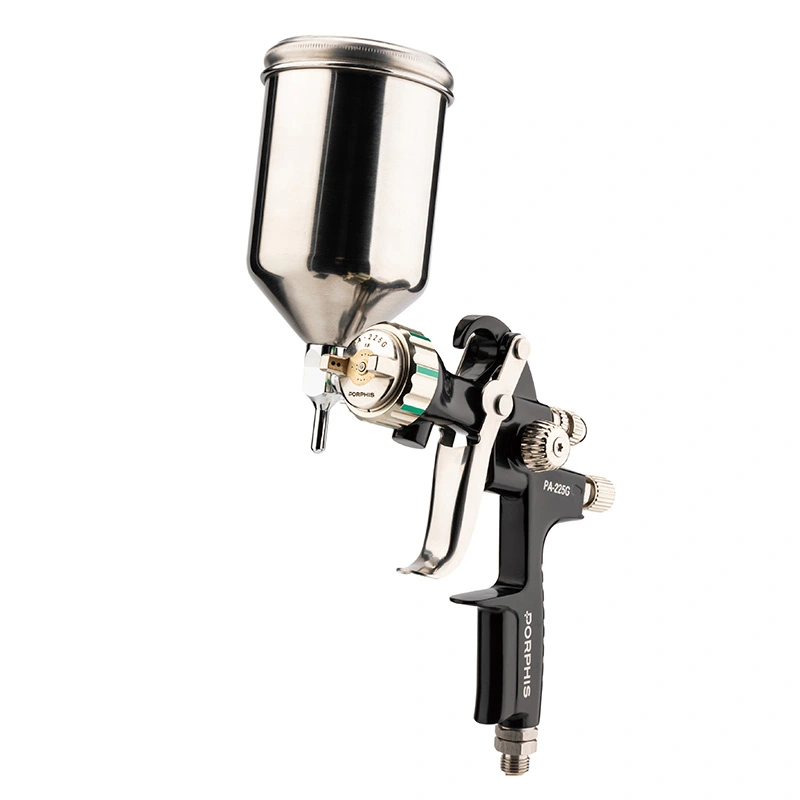
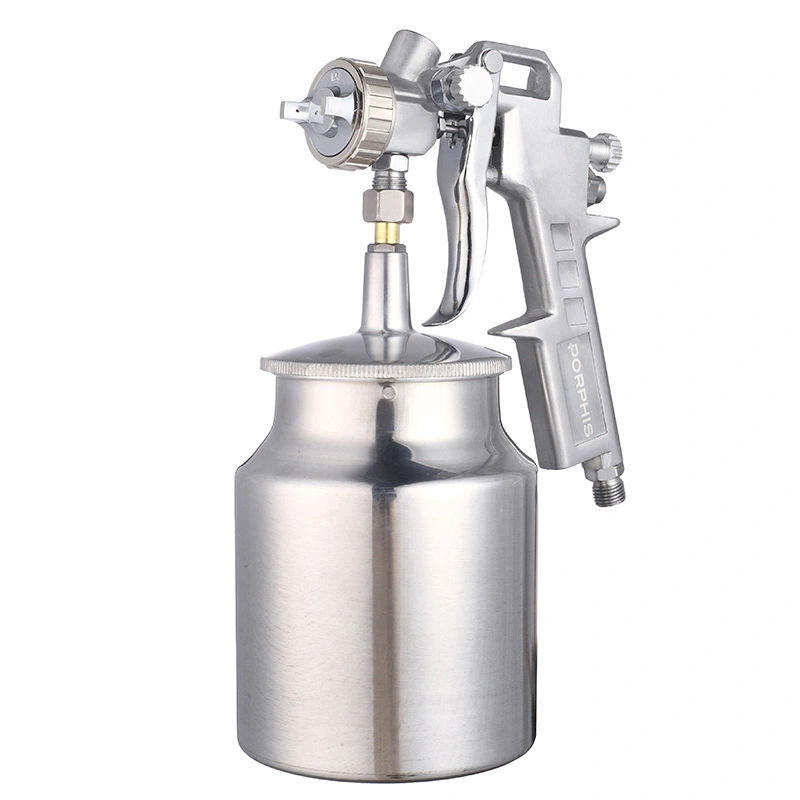
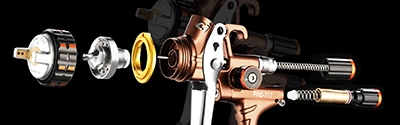
A professional spray gun is a precision instrument. At Porphis, our spray guns are engineered with the following critical components to ensure stable performance:
Air Cap: Controls the “fan” shape and the quality of atomization.
Fluid Nozzle & Needle: Usually made of high-grade stainless steel to resist corrosion and wear.
Pattern Adjustment Knob: Allows you to change the spray pattern from a small round dot to a wide oval fan.
Fluid Control Knob: Regulates how much paint is released when you pull the trigger.
Air Micrometer: Fine-tunes the air pressure entering the gun.
Choosing the wrong nozzle size is the leading cause of “orange peel,” runs, and dry spray. Use the following Nozzle Size Selection Table as a reference for your next project:
| Coating Type | Recommended Nozzle Size | Ideal Application |
|---|---|---|
| Thin Materials | 0.8mm - 1.2mm | Stains, dyes, touch-ups, and detail work. |
| Base Coats / Clear Coats | 1.3mm - 1.4mm | Automotive refinishing, furniture topcoats. |
| Primers / Sealers | 1.5mm - 1.8mm | High-build primers, surface sealers. |
| Thick / Heavy Materials | 2.0mm - 2.5mm | Polyester primers, gel coats, latex paints. |
Even the best Porphis spray gun requires proper technique to deliver a mirror-like finish. Follow these four pillars of professional spraying:
Keep the gun 6 to 8 inches (15–20 cm) away from the surface. If you are too close, the paint will run; too far, and it will dry before hitting the surface (dry spray).
Each pass should overlap the previous one by exactly 50%. This ensures even coverage and prevents “tiger stripes” or thin spots in the paint.
Always move your arm, not your wrist. The gun must remain perpendicular to the surface at all times. If you “arc” your wrist, the paint will be applied unevenly.
Pull the trigger after you start moving your arm and release it before you stop. This prevents “piling” of paint at the beginning and end of each stroke.
A professional spray gun is an investment. Proper maintenance is non-negotiable.
Clean Immediately: Never let paint dry inside the gun. Flush it with a compatible solvent immediately after use.
Deep Clean the Nozzle: Use specialized cleaning brushes to remove residue from the air cap and nozzle holes.
Lubrication: Use non-silicone lubricant on moving parts like the needle spring and trigger pivot to ensure smooth operation.
Inspect Seals: Periodically check the air and fluid seals to prevent leaks.
At Porphis, we are more than just a manufacturer; we are your partners in achieving the perfect finish. Our products are designed with the latest High-Efficiency Atomization (HEA) technology, ensuring:
Ergonomic Design: Lightweight and balanced for long hours of use.
Durability: High-grade materials that withstand harsh solvents and heavy industrial use.
Versatility: From automotive refinishing to industrial DIY, we have a solution for every project.
Explore our full range of Professional Spray Guns and Accessories to elevate your craft today.
A: For HVLP guns, the inlet pressure is usually around 25-30 PSI, which results in about 10 PSI at the air cap. Always check your specific gun’s manual.
A: Orange peel is usually caused by insufficient air pressure, paint that is too thick, or the gun being too far from the surface. Try increasing the pressure or using a faster-acting reducer.
A: While possible, it is not recommended. Primers require larger nozzles (1.7mm+), while clear coats require smaller ones (1.3mm). Having two dedicated guns prevents cross-contamination and ensures better results.
A: You can find a complete selection of nozzles, needles, and air caps at Porphis.com.

 English
 日本語
日本語 한국어
한국어 français
 Deutsch
 Español
 italiano
 русский
 العربية
 Polska