If you're exploring professional painting tools, one question often comes up: what is a conventional spray gun?
Whether you're in automotive refinishing, furniture manufacturing, or industrial coating, understanding how conventional spray guns work—and why they’re still widely used—can help you choose the right equipment for your needs.In this guide, we’ll break down everything you need to know, including how conventional spray guns work, their advantages, applications, and why they remain a reliable choice for professionals worldwide.
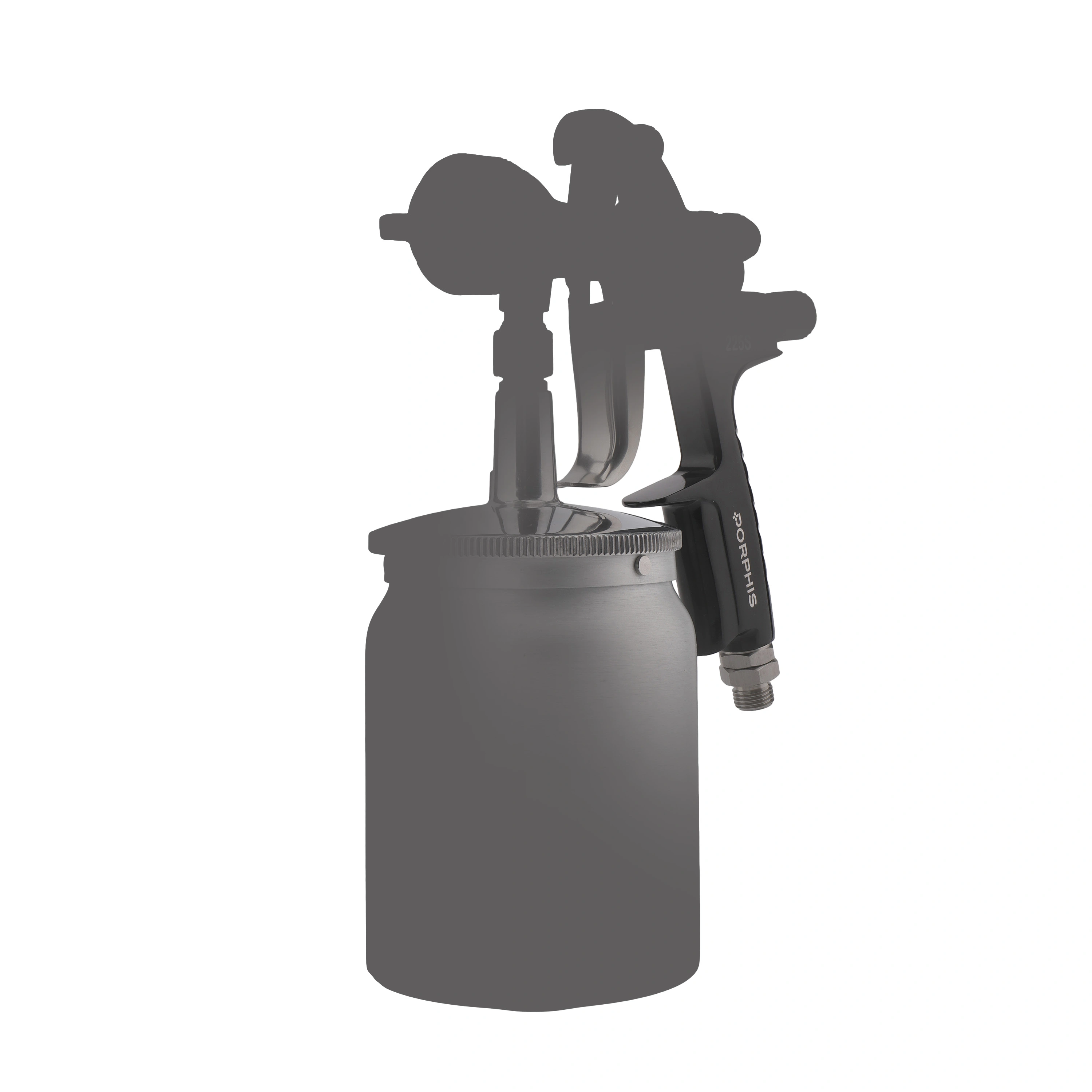
A conventional spray gun (also known as a high-pressure spray gun) is a painting tool that uses compressed air to atomize liquid coatings into a fine mist and apply them evenly to a surface. Inside the gun, air and paint travel through separate channels and mix at the nozzle, forming a controlled spray pattern that ensures smooth and consistent coverage.
Uses compressed air to atomize paint
Produces a fine, smooth finish
Operates at higher pressure (typically 20–50 PSI)
This technology has been widely used for decades and is considered the traditional standard in spray painting systems.
The working principle of a conventional spray gun is based on air pressure and atomization.
Compressed air is supplied from an air compressor
Paint is fed into the gun (gravity, siphon, or pressure feed)
Air and paint mix at the nozzle
The mixture is atomized into fine droplets
A controlled spray pattern is applied to the surface
A conventional spray system typically includes:
Spray gun
Air compressor
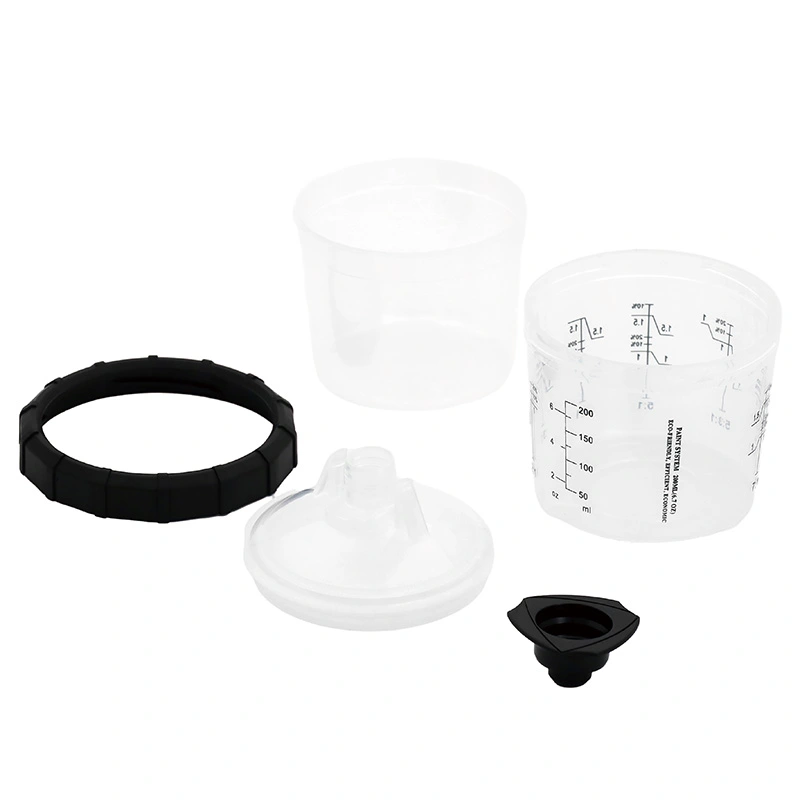
Paint container
Air and fluid hoses
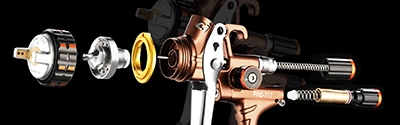
| Component | Function |
|---|---|
| Air Cap | Controls spray pattern and atomization |
| Fluid Nozzle | Regulates paint flow |
| Trigger | Controls release of air and paint |
| Paint Cup | Holds coating material |
| Adjustment Knobs | Fine-tune spray width and flow |
These components allow for precise control, making conventional spray guns ideal for professional applications.
Despite newer technologies like HVLP, conventional spray guns remain popular for several reasons:
High pressure creates an extremely fine mist, resulting in smooth, high-quality finishes.
Conventional spray guns deliver paint quickly, making them ideal for large-scale projects and production environments.
They can handle a wide range of coatings, including:
Lacquers
Enamels
Epoxies
Primers
Compared to newer systems, conventional guns are often more affordable and easier to maintain.
While powerful, conventional spray guns also have some drawbacks:
| Limitation | Explanation |
|---|---|
| Overspray | Only 30–40% paint reaches surface |
| Material Waste | Higher paint consumption |
| Environmental Impact | More VOC emissions |
| Air Requirement | Needs a strong compressor |
However, for many professionals, the performance benefits outweigh these limitations.
Understanding the difference helps answer not just what is a conventional spray gun, but also when to use it.
| Feature | Conventional Spray Gun | HVLP Spray Gun |
|---|---|---|
| Air Pressure | High (20–50 PSI) | Low (≤10 PSI) |
| Finish Quality | Very smooth | Good |
| Transfer Efficiency | 30–40% | 65%+ |
| Speed | Fast | Moderate |
| Overspray | High | Low |
Conventional spray guns are best when speed and finish quality are priorities, while HVLP is preferred for efficiency and environmental compliance.
Thanks to their power and flexibility, conventional spray guns are used across many industries:
Machinery coating
Metal finishing
Large-scale production
Car painting
Body repair
Primer and clear coat application
Cabinets
Tables and chairs
Decorative finishes
Structural steel
Protective coatings
Their ability to handle thick coatings and large volumes makes them indispensable in demanding environments.
A conventional spray gun is the best choice if you need:
High-quality, smooth finishes
Fast coverage for large surfaces
Compatibility with thick or heavy coatings
A cost-effective and durable solution
For industries where speed and finish matter more than material efficiency, conventional spray guns remain the top option.
If you're looking for a reliable solution, Porphis offers high-performance conventional spray guns designed for professional use.
Precision-engineered spray pattern
Durable construction for industrial environments
Flexible compatibility with various coatings
Ergonomic design for comfortable operation
These features make Porphis spray guns ideal for automotive, industrial, and commercial applications.
So, what is a conventional spray gun?It’s a powerful, high-pressure painting tool that delivers exceptional finish quality, fast application, and unmatched versatility. While newer technologies focus on efficiency, conventional spray guns continue to dominate in environments where performance and reliability are critical.If you want a proven, professional-grade solution for your painting needs, a conventional spray gun remains one of the best investments you can make.

 English
 日本語
日本語 한국어
한국어 français
 Deutsch
 Español
 italiano
 русский
 العربية
 Polska